
At Parkin, we understand that architecture has the power to shape experiences, particularly in healthcare and long-term care settings, where thoughtful design can actively support healing, dignity, and mental well-being. From cancer centers to seniors’ residences, the environments we create have the power to reduce anxiety, promote connection, and restore a sense of control. We believe healing begins the moment someone enters a space. Our approach prioritizes empathy, community, and cultural meaning, rooted in research and shaped by experience.
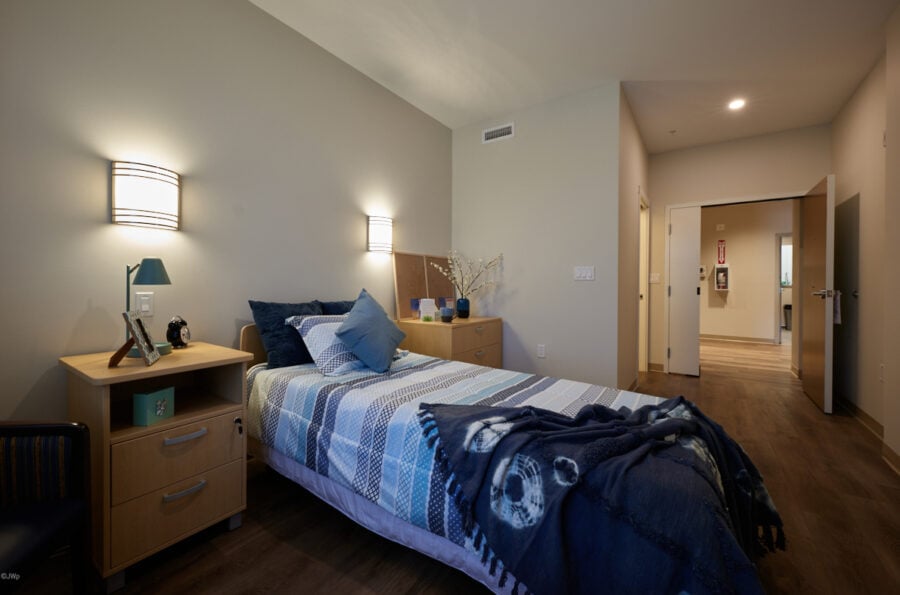
Hamilton High Street Residences, Richmond, BC – Memory Care Unit, Jerald Walliser Photography
Over the past few decades, long-term care facilities have evolved dramatically. Institutional, clinical environments have given way to settings that are residential in scale, familiar in character, and sensitive to the emotional needs of the residents that prioritize dignity, comfort, and social connection. Today’s best practices in senior living design integrate smaller scale “household” models, personalized rooms, and seamless access to nature and daylight. These features foster autonomy and enhance quality of life by supporting both physical and mental health.
Intuitive wayfinding, acoustic management, and the integration of engaging, secure social areas all play a role in creating environments that promote autonomy and reduce stress particularly for memory care residents. At Hamilton High Street Residences in Richmond, BC, the design of the memory care unit reflects a careful balance of safety and warmth, drawing on biophilic principles and scaled to feel like a home, the space creates a sense of familiarity and ease.

Healing environments must also reflect the cultural identity of the communities they serve. The Cowichan District Hospital Replacement Project exemplifies how architecture and Indigenous culture can converge to create spaces that are restorative and inclusive. Developed in close collaboration with local Cowichan Elders and artists,
the hospital integrates OCAP®-guided Indigenous art throughout the facility. These pieces are not merely decorative; they embody shared history, honour the land, convey community stories, and offer emotional grounding for patients, families, and staff.
Evidence-based design supports the inclusion of art in healthcare spaces, showing measureable benefits such as stress reduction, improved recovery times, and strengthens a sense of place. Art is particularly impactful in transition spaces like waiting areas, corridors, and clinical zones, where the hospital becomes a sanctuary. A place that acknowledges spirit, identity, and healing in equal measure.
Outpatient cancer centers offer another lens through which to examine the relationship between mental health and design. For patients undergoing treatment, clear navigation, shorter walking distances, and access to natural light can significantly reduce stress and fatigue. At the New Surrey Hospital and BC Cancer Centre, designed in collaboration with ZGF Architects, Parkin’s planning emphasizes intuitive wayfinding, centralized clinics, quiet waiting areas, and a strong connection to nature to help ease the treatment experience.
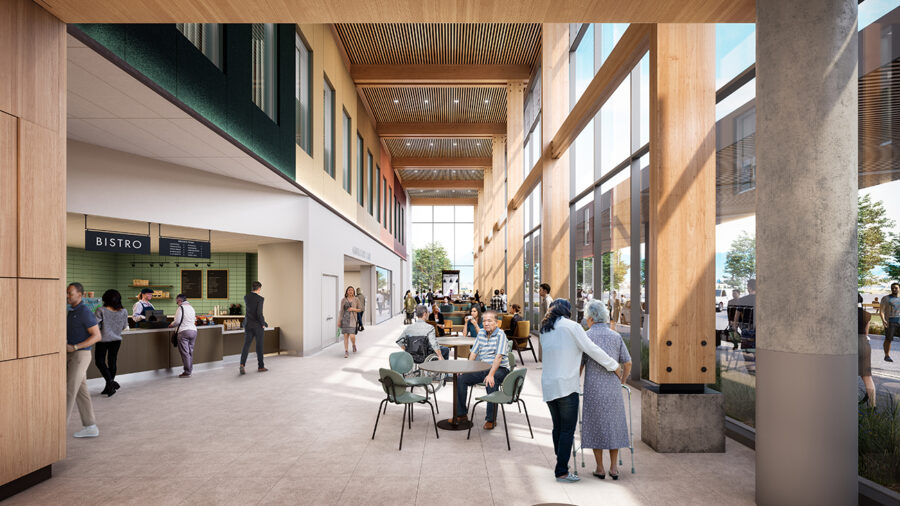
The new Surrey Hospital and BC Cancer Centre: 95 Degree, EllisDon, Parkin and ZGF Architects in association
Designing with empathy also means planning for moments between appointments. Public zones that combine food service, event space, and natural light encourage informal gathering and community. While thoughtful separation between treatment areas and food services respects the nuanced needs of patients’ sensitivities during chemotherapy. These subtle yet significant design decisions show respect, and create environments where patients feel safe, seen, and supported.
Whether designing for acute care, long-term care residences, cancer centers, or outpatient clinics, we believe that healing design requires a holistic approach. It means listening to patients, families, staff, and community members. It means applying research, in evidence-based design, sustainability, mental health, and cultural inclusion to create environments that do more than treat illness and deliver care. They help restore the human spirit.
As Senior Interior Designer Mary Chernoff reflects:
“Long-term care has experienced a beautiful evolution: From large-scale institutions to warm, welcoming, home-like environments that preserve dignity and promote comfort. That same philosophy informs all our work. Everyone deserves to heal in a space that honours who they are.”
Feature Photo: Cowichan District Hospital – Cicada, EllisDon, Parkin and ZGF Architects in association