Accessibility is often treated as a checklist at the end of a project—something to validate once key decisions have already been made. Universal design asks for something different: to design environments, services, and experiences that work for as many people as possible, from the outset.
In practice, that means moving beyond minimum code compliance and paying attention to the everyday frictions that can make a place exhausting, confusing, or exclusionary.
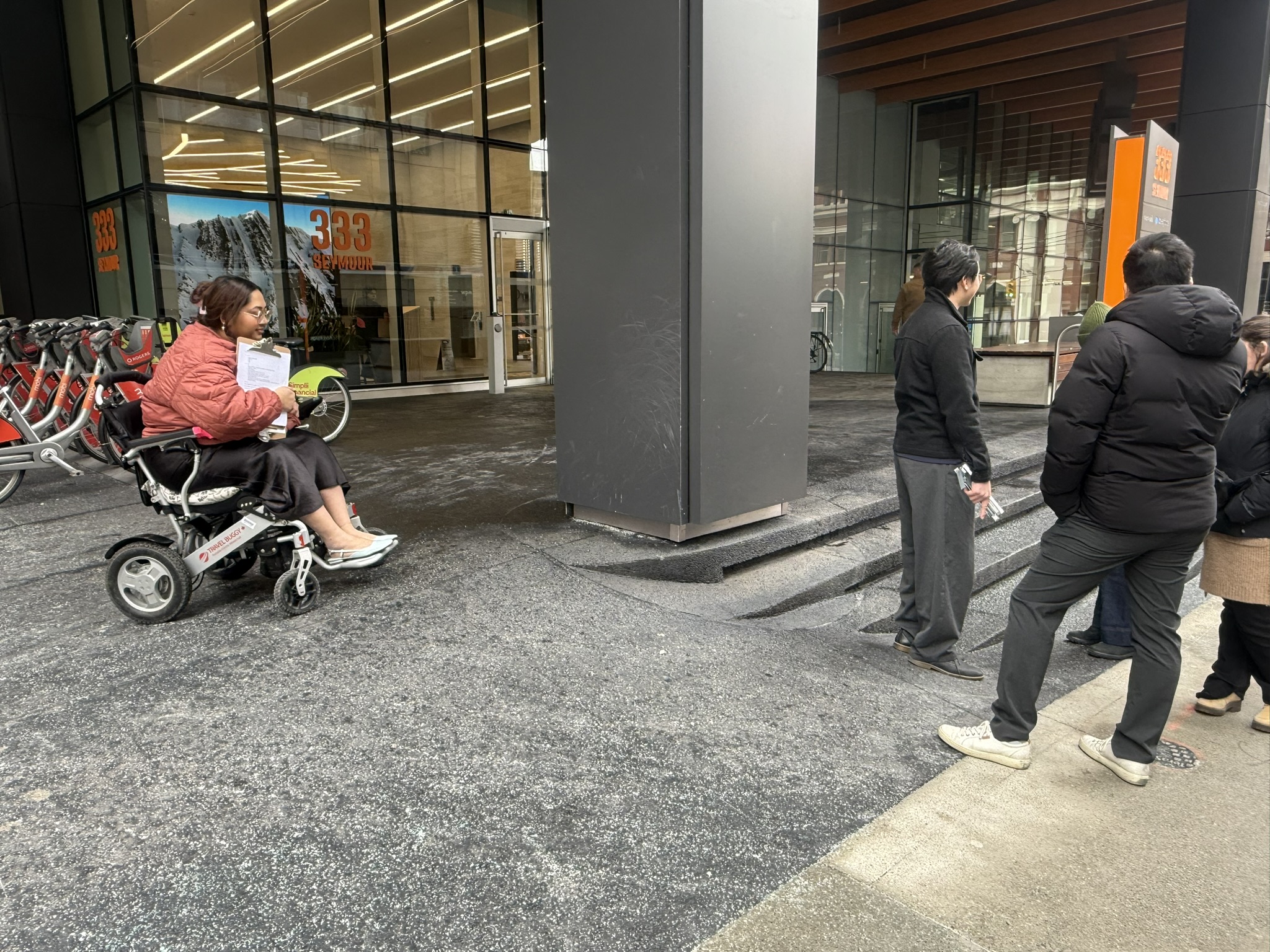
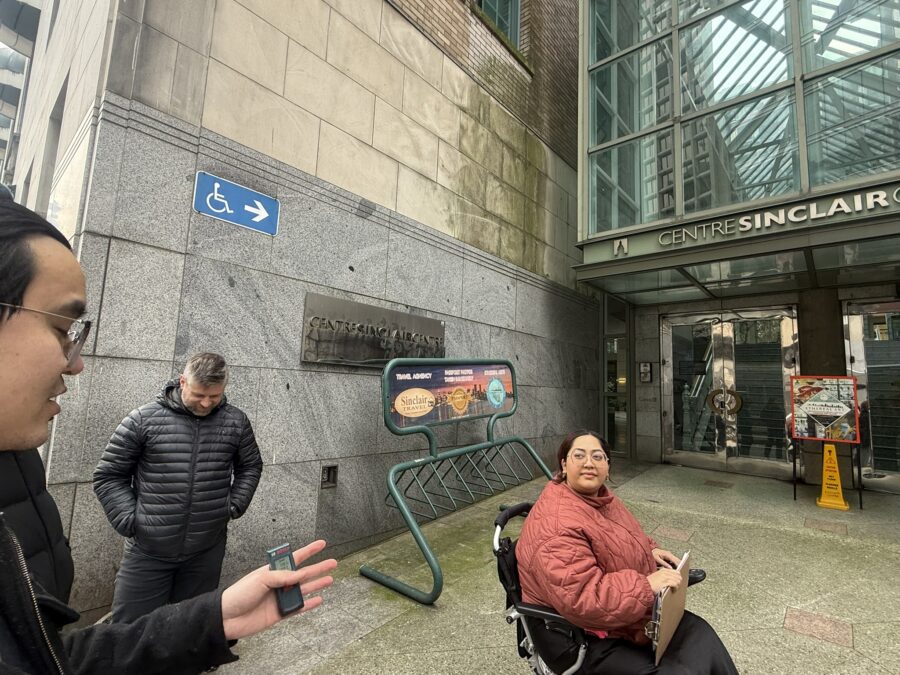
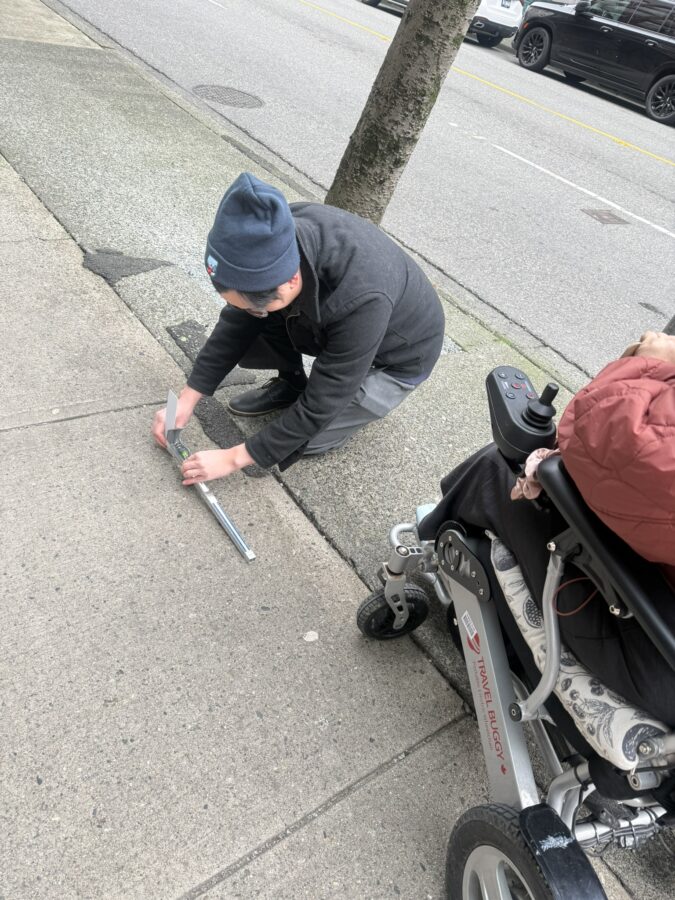
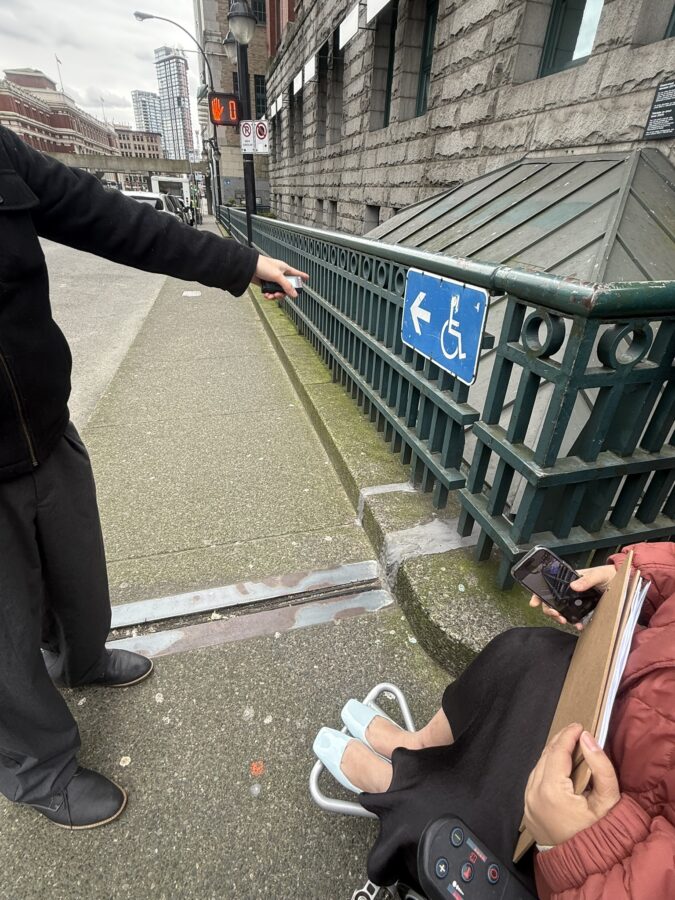
To embed this thinking into our own work, Parkin’s accessibility advisors Anika Abdullah and Ryan Bui led a two-day universal design audit and workshop at our Vancouver office and within the surrounding neighbourhood. The goal was to evaluate the real experience of arriving, entering, navigating, and using the space—through the perspectives of both visitors and staff—and translate those observations into actionable design strategies into future projects.
A Holistic Approach to Accessibility in Workplace Design
Rather than assessing accessibility as a series of isolated features—a ramp, a power door, or an accessible washroom—the audit focused on the full user journey. Inclusion is not defined by a single intervention; it is experienced through transitions: from street to entry, from lobby to workstation, and from meeting room to shared amenities.
The audit framework examined key moments in that journey asking:
Arrival and Approach
- Are sidewalks, curb cuts, and crossings continuous, predictable, and safe?
- Do surface changes, slopes and seasonal conditions support mobility for all users?
Transit and First/Last-Metre Connections
- Do transit stops provide shelter, seating, and clear access in all weather conditions?
- Is arrival dignified and intuitive for everyone?
Building Entry
- Can all users easily and access the main entrance without feeling segregated?
- Are doors, thresholds, and security systems usable with limited mobility, reach, or vision?
Wayfinding and Spatial Legibility
- Can all users easily identify and access reception, washrooms, and meeting rooms without feeling segregated?
- Are signage, lighting, and contrast designed to support diverse visual and cognitive needs?
Workplace Environments
- Do workstations offer flexibility in posture, privacy, and sensory conditions?
- Are layouts adaptable to different bodies, abilities, and work styles?
Amenities and Shared Spaces
- Are kitchens, storage, and shared resources intuitive and accessible to use independently?
- Can users move through spaces while carrying items without barriers?
Washrooms
- Do washrooms support real world use beyond code compliance, including
turning space, door manoeuvring, hardware, hooks/shelves, and enough room to support a caregiver or mobility aid?
- Are accessible options equally visible and integrated?
Rest and Recovery Spaces
- Are there opportunities to pause along longer routes?
- Do these spaces support people managing fatigue, pain, or sensory overwhelm?
Accessibility Extends Beyond the Building
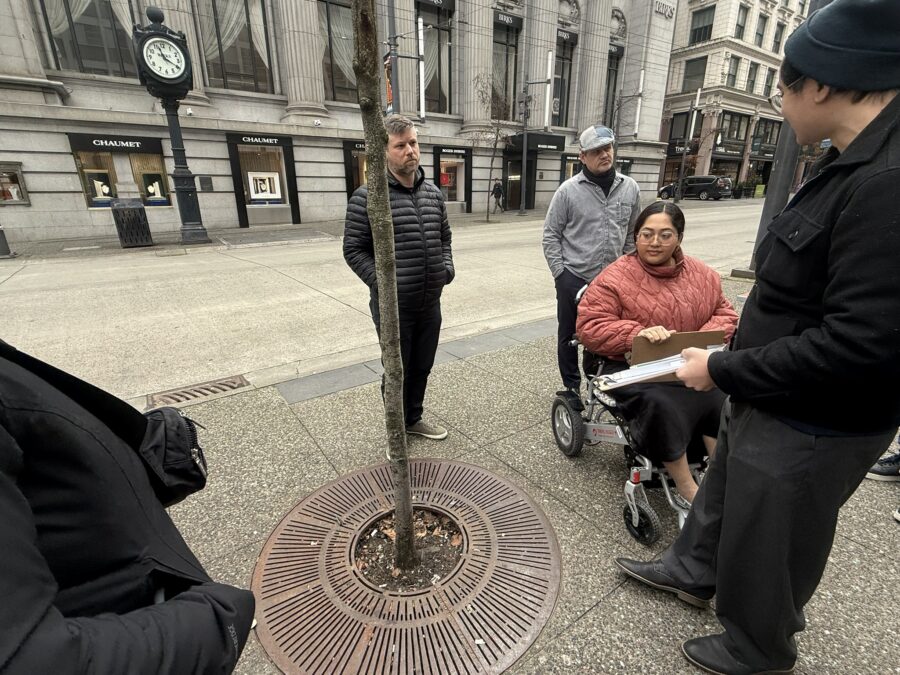
The neighbourhood walk revealed a critical insight: workplaces do not start at the front door.
The public realm—sidewalks, crossings, transit, lighting, seating, and maintenance—plays a significant role in determining who can access a space independently. For individuals managing fatigue, chronic pain, low vision, neurodivergence, or a temporary injury, even minor barriers can accumulate into meaningful obstacles.
Accessibility, in this context, becomes a system, not a single design move
A power door that leads to a constrained vestibule, a clear corridor that ends at a heavy door, or an accessible washroom located down an indirect route all create “broken links” in the user experience. Universal design audits help identify those gaps early—when they can be addressed through planning, layout, detailing, and operations—before they become costly retrofits or normalized exclusions.
From Audit to Action: Designing More Inclusive Environments
For Parkin, universal design audits are both an internal tool and a client-facing service. They strengthen how we observe, how we ask questions, and how we translate lived experience into design decisions.
Three key insights emerged:
- Sequence matters: Accessibility is only as strong as the weakest link in the journey
- Choice matters. People need options for how they move, work, and experience space
- Operations matter: Maintenance, signage, and day-to-day use directly impact accessibility over time.
Embedding Inclusive Design from Day One
Designing for accessibility is not about adding features. It is about shaping environments where more people can participate, independently and with dignity. Starting with our Vancouver office, we are applying these learnings across our offices and projects. By embedding universal design and accessibility principles early, we can create environments that are not only compliant, but genuinely inclusive.
If you’re planning a new workplace, renovating an existing space, or assessing the accessibility of a campus or public realm, a universal design audit can provide a practical roadmap—from immediate improvements to long-term strategies.