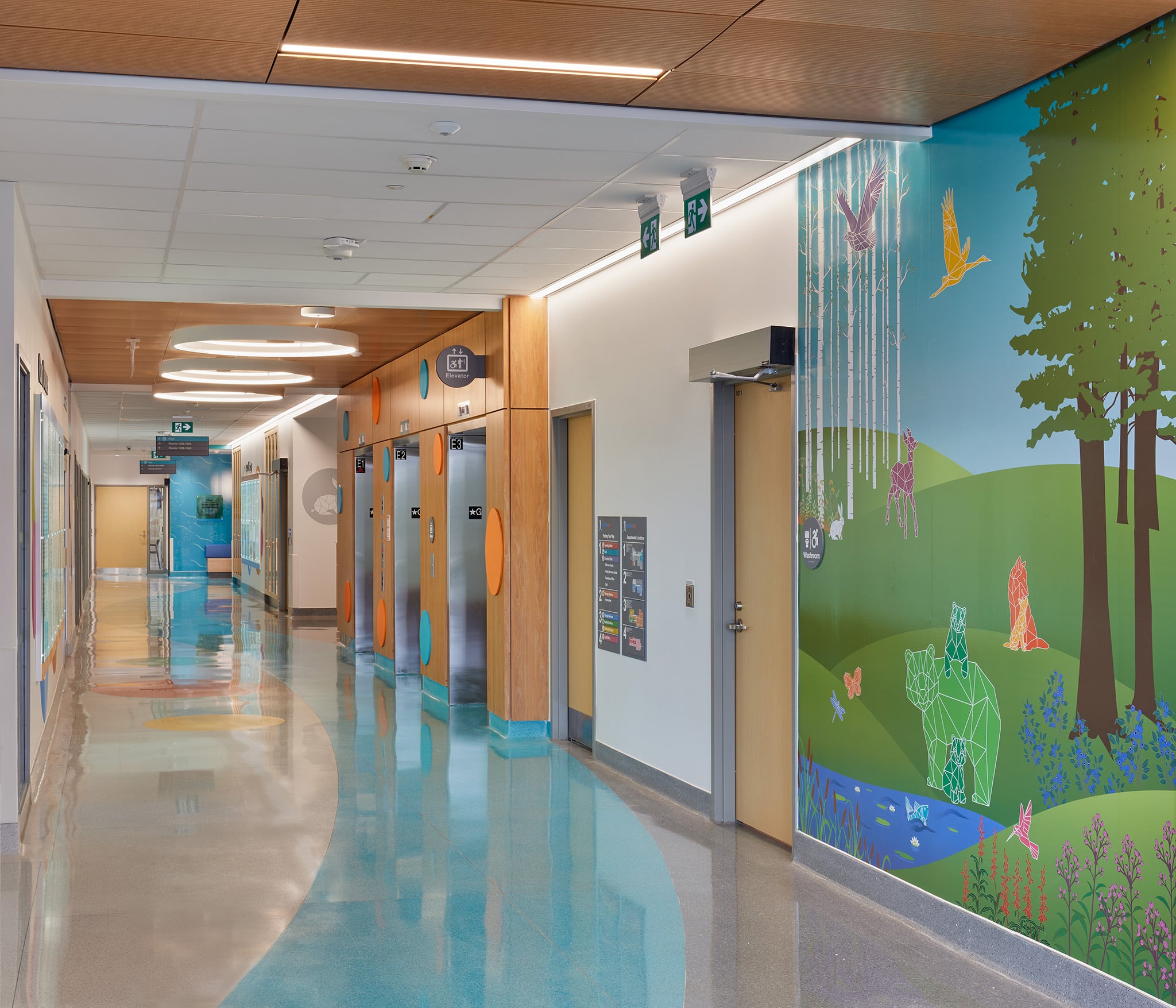
At Parkin, we see wayfinding as more than a signage strategy. It is a core component of human-centered healthcare design that shapes how patients, families, and staff experience a space. In complex healthcare environments, intuitive navigation can reduce stress, improve accessibility, and support a more positive experience of care.
The Emotional Experience of Navigation
Hospitals are among the most emotionally charged environments people experience. Patients, families, and visitors often arrive under stress, uncertainty, or urgency, which can make even simple navigation feel overwhelming. In this context, healthcare wayfinding is not a secondary design consideration. It is a fundamental part of the healthcare experience.
When navigation is intuitive, people can move through a facility with greater confidence and less anxiety, allowing the environment to support care rather than add to the burden of it. Clear accessible pathways also help staff work more efficiently, reducing interruptions and improving operational flow throughout the hospital.
Wayfinding Begins with the Built Environment
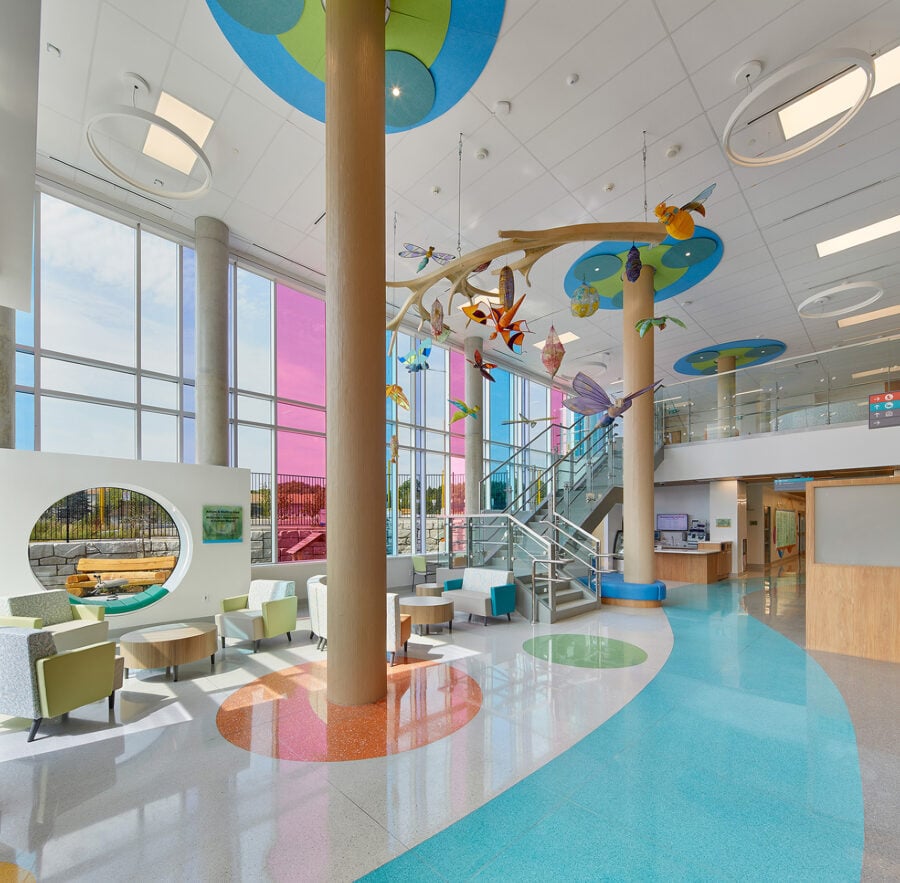
Too often, wayfinding is reduced to a signage package added late in the process. Effective healthcare wayfinding begins much earlier and is shaped by the building itself.
Architecture and interior design play a critical role in helping people understand where they are, where they need to go, and how to get there. Clear sightlines, intuitive circulation paths, distinct destination zones, strategic use of colour and material, access to daylight, and recognizable landmarks all contribute to a more navigable and welcoming environment.
Signage remains an important part of the wayfinding system, but it works best when it reinforces a spatial logic already embedded within in the design.
Designing for Diverse Users
Healthcare facilities serve one of the widest and most diverse user groups of any building type. Hospitals must be understandable to first-time visitors, older adults, children, people under stress, and individuals with a broad range of cognitive, sensory, linguistic, and physical abilities.
Research in healthcare design increasingly points to the importance of creating environments that rely on more than written directions alone. Successful wayfinding depends on how people interact with the physical environment and interpret spatial cues. A human-centered approach therefore prioritizes clarity, consistency, accessibility and inclusivity at every point in the journey.
Clarity as a Form of Care Clarity
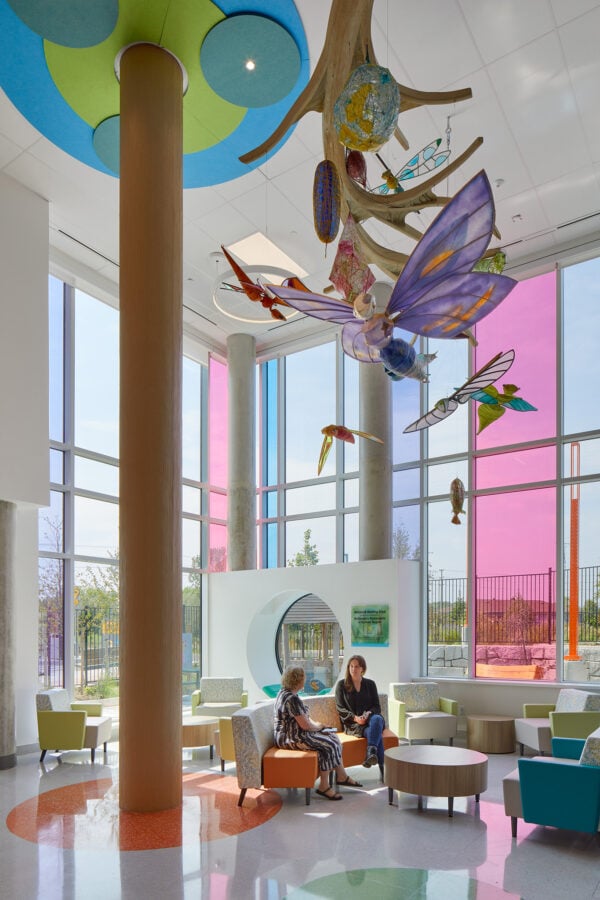
When thoughtfully integrated, wayfinding does more than help people reach a destination. It can reduce stress, support dignity, and build trust in the healthcare environment. It also contributes to operational efficiency by minimizing confusion, delays, and the need for staff intervention.
For designers, this means treating wayfinding not as an overlay, but as an integral part of healthcare architecture and interior design from the outset. In healthcare environments, clarity is care, and the ability to navigate a space with ease is closely connected to feeling welcomed, respected, and supported.