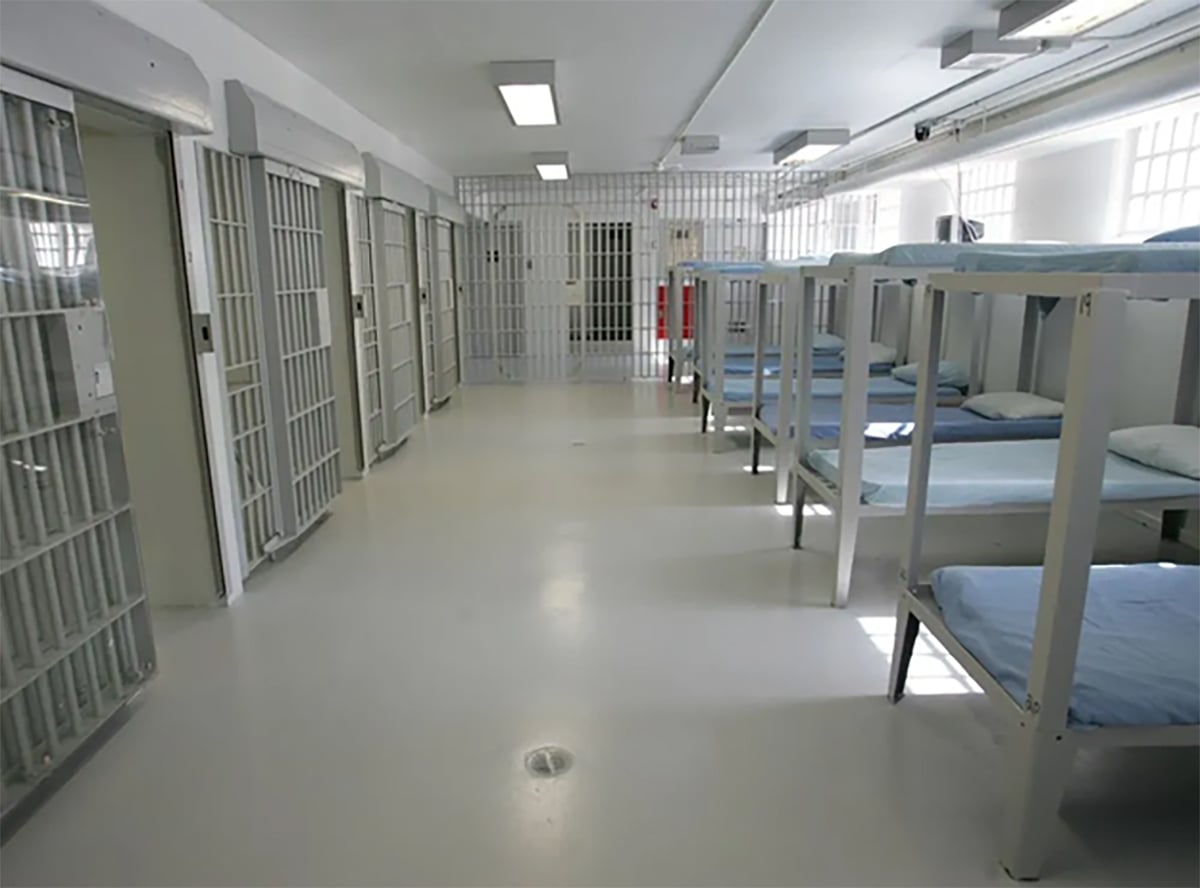
A rise in remand populations, short stays, and increasing mental-health needs are reshaping how correctional facilities must be planned, staffed, and designed.
For decades, many provincial correctional facilities were primarily planned around sentenced populations—individuals serving longer, more predictable periods of incarceration. This reality informed everything from housing units and circulation to programming, clinical space, and staffing models.
Today, across Canada, that reality has shifted. Correctional facilities are increasingly operating as high-turnover remand environments, and the architecture has not kept pace.
What the Data Reveals About Remand Populations
New research led by justice designer and Carleton University adjunct professor Robert Boraks shows that across Canada remand populations—individuals awaiting trial or sentencing—has increased between 200 to 300% since 2000, while the sentenced population has declined by over 50%%.
This shift has fundamentally changed how facilities operate. The median length of stay for remanded individuals is often as low as 19 days, creating a system defined by constant movement rather than long-term containment.
Capacity pressures are also significant. Many facilities at levels twice their original design capacity. It is not uncommon to have facilities where 60% of men and 75% of women sentenced to custody serve less than one month. These conditions reflect a correctional system that no longer aligns with traditional correctional facility planning models.
Implications for Correctional Facility Design
As Principal at Parkin Architects and lead author of Alberta’s Correctional Facility Planning Study, Boraks highlights the urgency of aligning design with operational reality:
“Across Canada, we are housing a short-term, high-turnover population in buildings designed for longer-term containment. The data shows many facilities were built for a correctional model that doesn’t correspond to the needs of current populations.” — Robert Boraks
Designing for today’s remand-driven environments requires a fundamental shift in approach. Key priorities include:
- Intake, assessment, and discharge spaces designed for high turnover, not treated as secondary functions
- Clear wayfinding and orientation strategies that support short stays and reduce operational friction
- Flexible, right-sized programming spaces that remain effective even when most stays are under 30 days
- Scalable clinical and mental-health environments that balance observation, privacy and safety
- Integrated release planning infrastructure that enables faster connection to community
Mental Health in Corrections: A Critical Design Challenge
Mental health is one of the most pressing challenges facing correctional environments. The study found that up to 73% of male inmates and 79% of female inmates have a diagnosed mental illness, often linked with substance use.
Despite this, the majority of remand facilities across Canada typical have less than 5% or their beds allocated to support these individuals. It is not uncommon to see facilities that are unable to support mental-health needs.
At the same time, more than 20% of individuals are reconvicted within three months of release. Underscoring the role of correctional facilities as short-term holding environments rather than effective stabilization or rehabilitation settings.
While design alone cannot solve systemic challenges, it plays a critical role. Thoughtful correctional facility design can support:
- Safe and appropriately scaled clinical environments
- Spaces for de-escalation, observation and treatment
- Improved staff visibility and safety
- Environments that support dignity while enabling access to care
Designing for Equity and Representation
Indigenous overrepresentation remains a critical issue within Canada’s justice system. In Alberta, Indigenous people are incarcerated at rates 10.8 times higher than non-Indigenous people, and Indigenous women at 15.4 times higher.
Addressing this reality requires more than policy change—it demands design approaches that acknowledge lived experience, cultural context, and pathways to reintegration.
As Boraks notes, “This isn’t about building bigger jails. It’s about designing facilities that reflect who is actually inside them—and what they need to successfully reintegrate back into society.”
Rethinking Justice Architecture for Better Outcomes
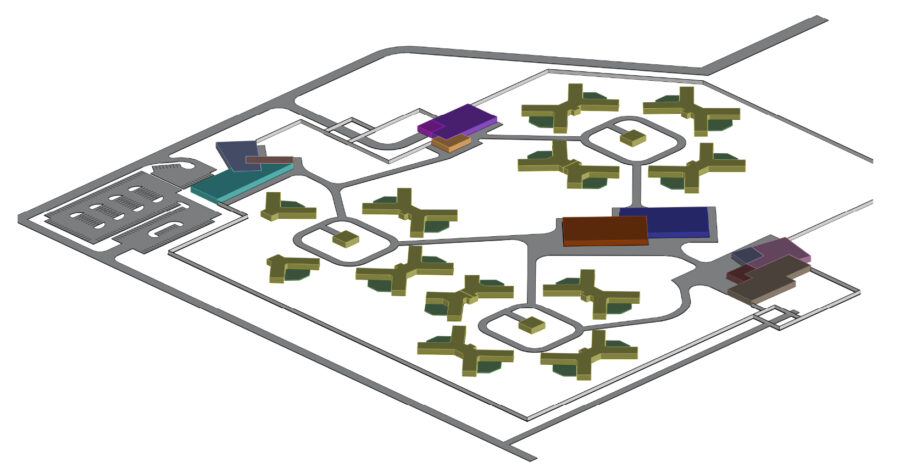
At Parkin, we see justice architecture as an opportunity to align the built environment with today’s operational realities—remand-driven populations, shorter stays, and increased health complexity.
Designing for this new reality means moving beyond traditional correctional models toward environments that support safety, dignity, and better long-term outcomes. By integrating data, operational insight, and human-centred design, correctional facilities can better serve individuals, staff, and the broader community.
Feature Image: File image from inside the intermittent use cells of Calgary Correctional Centre. Tuesday, Sept. 15, 2009. Photo by Ted Jacob /Calgary Herald