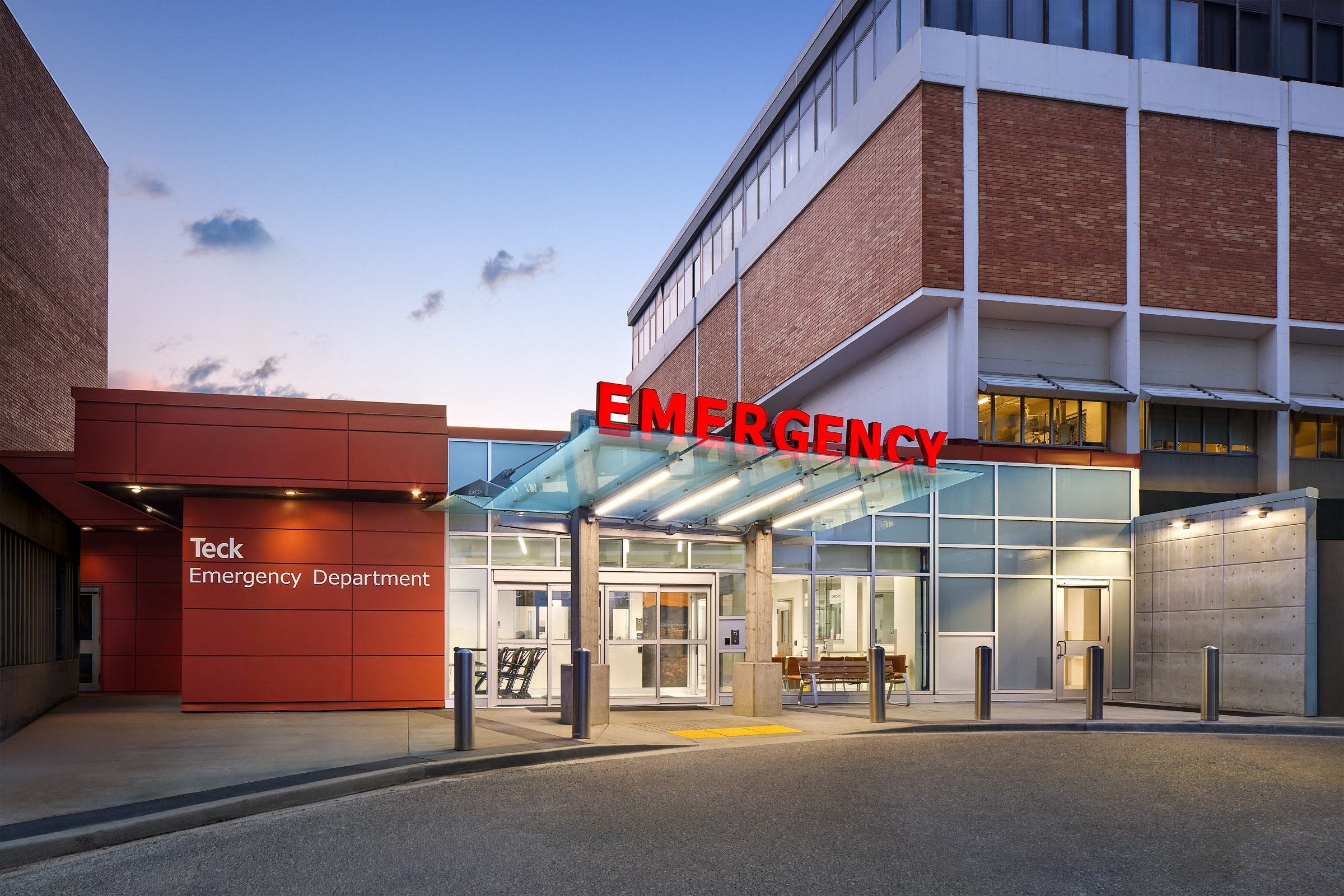
Renovating an active hospital is one of the most complex challenges in healthcare design. Every phase must balance modernization, safety and the realities of uninterrupted patient care. Royal Inland Hospital’s Phase 2 redevelopment demonstrates is a strong example of how careful planning, deep clinical collaboration, and technical ingenuity can transform a working hospital while maintaining the highest standard of care.
Phased Construction that Protects Patient Care
The project unfolded in tightly sequenced phases, often subdivided into micro-steps to ensure only limited portions of the hospital were closed at a time. The emergency department, the most complex area, presented the greatest challenge. Renovations and relocations occurred in overlapping stages to maintain 24/7 service.
Every milestone—from the timing of demolition to the constructing temporary “swing” spaces—was coordinated around daily hospital operations. Continuous partnership between design, construction, and clinical teams ensured that patient care was never compromised.
Integrating Old and New: Navigating Legacy Hospital Systems
Royal Inland Hospital had evolved over decades into a patchwork of structures built to different standards, heights, and systems. Modernizing these interconnected spaces required meticulous integration of old and new construction while meeting current seismic, mechanical, and accessibility codes.
Unexpected conditions were part of the process. When a concrete column appeared mid-demolition, in front of a planned Care Team Station, the team swiftly redesigned the area with a slender steel column, preserving line of sight from CTS to stretcher bays and maintaining the schedule. This adaptability reflects Parkin’s strength in technical problem-solving under pressure.
Modernizing Systems in Tight, Active Conditions
Upgrading mechanical, electrical, and IT systems in an active hospital required creative routing and custom solutions. Low ceiling cavities left limited space for modern ductwork and piping, requiring strategies such as flexible ducts, bulkheads, and vertical expansions. These solutions increased system capacity without losing valuable clinical space.
Some improvements included adding rooftop mechanical units, strategically positioned to minimize vibration and noise in sensitive departments such as imaging. Each decision balanced engineering performance with the needs of staff and patients.
Collaboration and Community Engagement as Design Drivers
Stakeholder engagement was central to the project’s success. Clinicians, hospital leadership, and Indigenous community representatives informed design decisions early and throughout the project. Interior design concepts and finishes developed in Phase 1 were deliberately carried into Phase 2 to maintain visual continuity, reduce approval times, and reinforce a unified patient experience.
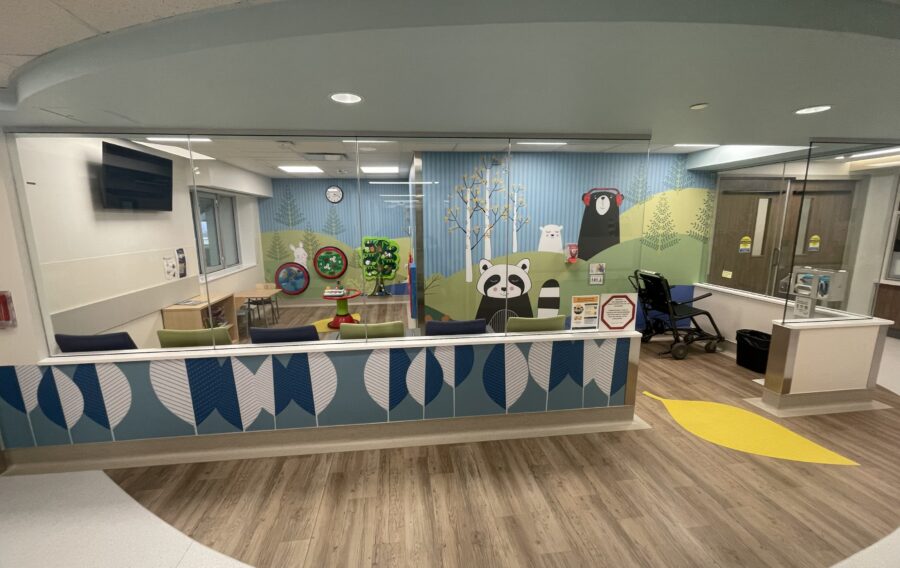
The redevelopment also triggered a “domino effect” of program improvements. When the new maternal floor opened in Phase 1, the former maternity unit became available for pediatric expansion. The design team transformed the space with child-friendly graphics, colours, and layout, demonstrating how thoughtful sequencing can unlock broader improvements across the hospital.
Supporting Dignity in Difficult Moments and Meeting Patients’ Special Needs
One of the most meaningful upgrades was the expansion and modernization of the hospital morgue. The new private family viewing area was designed as a calm, respectful space that supports families during the most difficult moments. This reflects Parkin’s commitment to dignity-centered healthcare design, recognizing that healing environments must also support compassionate end-of-life experiences.
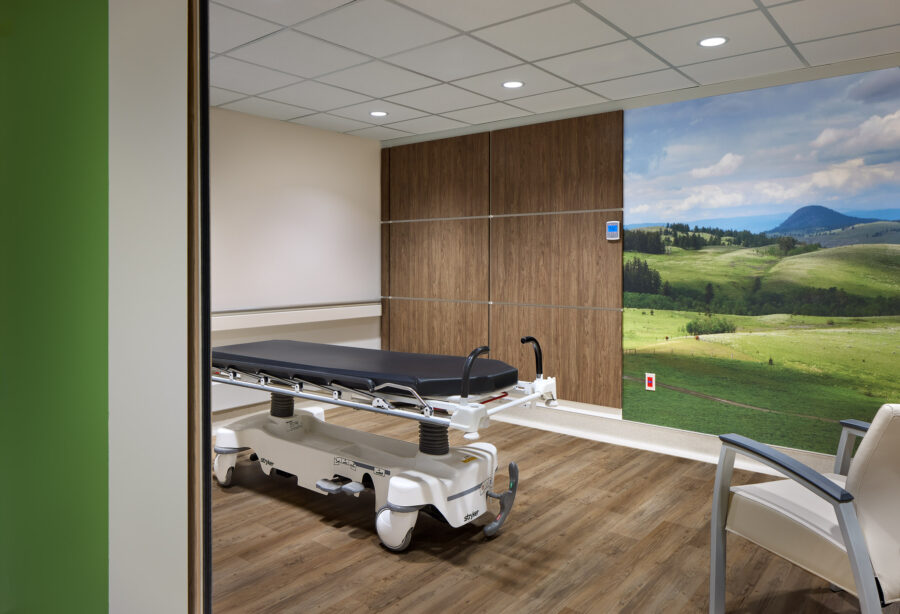
Another significant enhancement is the consolidation and modernization of the Emergency Department’s mental health areas. Both patient treatment areas and staff support zones have been expanded and designed as safe, secure environments that require specialized planning, materials and expertise. These improvements strengthen the hospital’s ability to deliver high-quality, patient-centered mental health care during moments of acute need.
Lessons Learned: Innovation Through Collaboration and Technical Clarity
Royal Inland Hospital Phase 2 shows that innovation in healthcare renovation is not always about dramatic visual change. It’s about precision, empathy, and engineering intelligence. Through careful phasing, strong stakeholder engagement, and a commitment to technical excellence allowed the hospital to remain fully operational while undergoing major transformation.
The result is a modern, cohesive, and resilient care environment—delivered one carefully sequenced stage at a time, without compromising the people it serves.