
Optimizing Long-Term Care Design: The Evolution of Senior Living Spaces
Long-term care (LTC) facilities have transformed dramatically over the past few decades. Once characterized by large- institutional environments, they have evolved into warm, welcoming spaces designed to support dignity, comfort, and community for seniors. Advances in healthcare, architecture, and interior design, have played a crucial role in this shift, all aimed at fostering a more compassionate and effective model of care.
A Brief History of Long-Term Care
The origins of long-term care date back centuries, to almshouses and charitable institutions that provided basic shelter and medical attention to the elderly and infirm. By the mid-20th century, LTC facilities took on a more clinical approach, resembling hospital-like settings with a focus on efficiency rather than comfort. While these models delivered essential medical care, they often lacked the warmth and personalization necessary for emotional and psychological well-being.
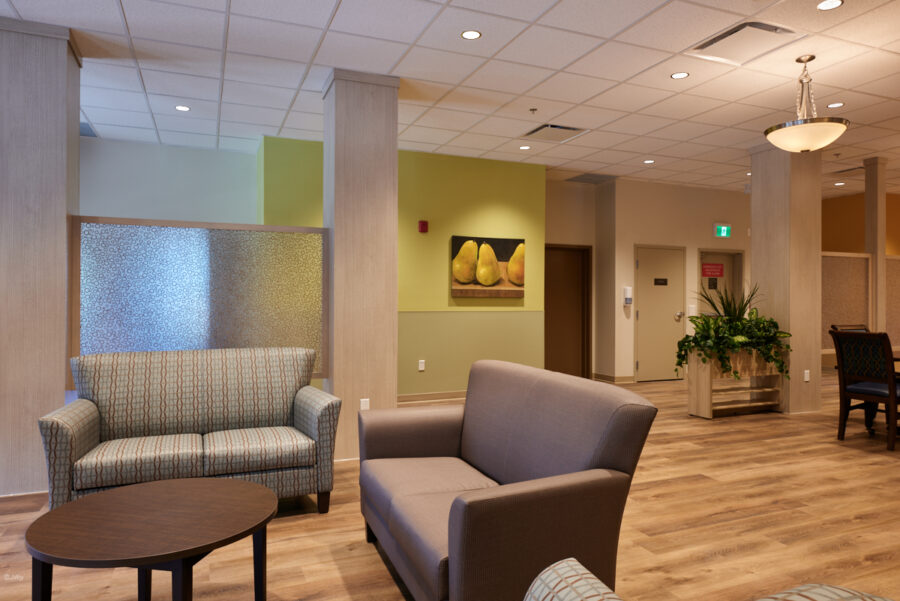
Hamilton High Street Residences, Richmond, BC – Memory Care Unit, Jerald Walliser Photography
The Transformation of Long-Term Care Facilities
Over the last three decades, long-term care spaces has shifted towards a residential approach, prioritizing a sense of home, autonomy, and community for residents. Modern LTC facilities now embrace:
- Household-style living: Smaller, self-contained communities that create a homelike atmosphere.
- Person-centered care models: Emphasizing individualized support and resident choice.
- Technology integration: Smart monitoring systems and adaptive equipment to enhance safety and independence.
- Sustainable and wellness-focused design: Incorporating biophilic elements, ample natural light, and access to green spaces.
Understanding the Spectrum of LTC Environments
Long-term care encompasses a diverse range of facilities, each catering to different levels of care:
- Independent living communities: Designed for active seniors who require minimal assistance.
- Assisted living facilities: Offering a mix of independence with support with daily activities.
- Memory care units: Specialized care for residents with dementia or Alzheimer’s.
- Skilled nursing facilities: Providing round-the-clock medical and rehabilitative care.
- Continuing care retirement communities (CCRCs): A flexible model that allows residents within a single community, to transition between levels of care as needed.
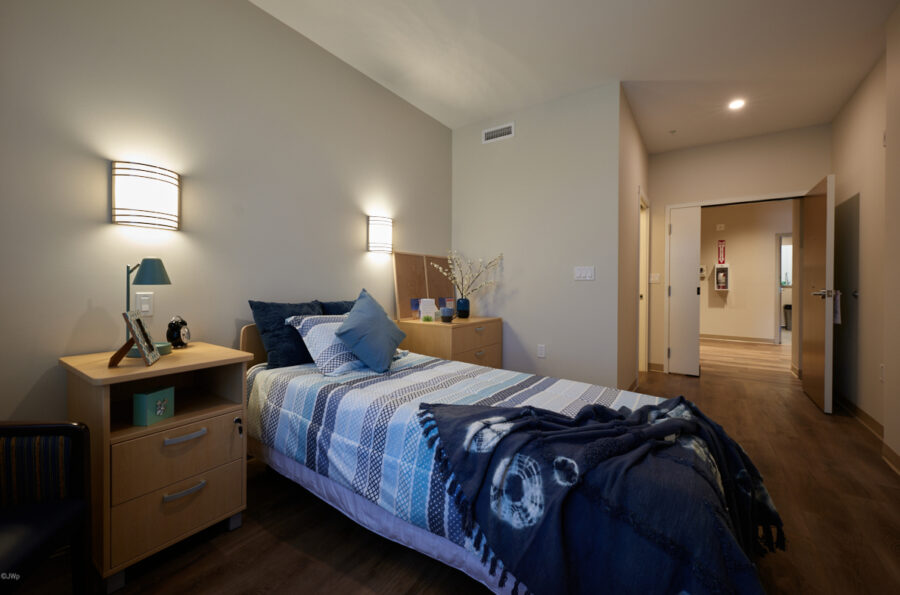
Hamilton High Street Residences, Richmond, BC – Memory Care Unit, Jerald Walliser Photography
Key Design Principles for Modern LTC Facilities
- Creating home-like environments: Enhancing familiarity and comfort.
- Universal accessibility: Ensuring spaces accommodate all mobility levels.
- Safety and infection control: Implementing best practices in hygiene and security.
- Social engagement spaces: Designing areas that encourage interaction and engagement.
- Nature integration: Utilizing gardens, courtyards, natural views and outdoor access.
- Personalized rooms: Allowing residents to bring personal touches to their space.
- Intuitive navigation: Clear wayfinding strategies to support cognitive health.
- Flexible layouts: Adaptable designs for evolving care needs.
- Acoustic control: Reducing noise levels for a calm atmosphere.
- Technology-driven solutions: Enhancing safety, communication, and entertainment.
Features that Define Exceptional LTC Facilities
Innovative LTC facilities prioritize:
- Smaller-scale communitiesthat promote connection and familiarity.
- Enhanced natural lighting to support circadian rhythms and mental well-being.
- Dynamic activity areas that encourage movement, creativity, and socialization.
- Family-friendly zones to strengthen personal relationships.
Evolving Philosophies in Senior Care
Long-term facilities are increasingly adopting care philosophies that influence their design and care giving models, such as:
- The Eden Alternative: Focusing on companionship, purpose, and meaningful engagement.
- Green House Model: Establishing smaller homes with fewer residents, emphasizing autonomy and intimate care experience.
- Montessori Approach for Dementia: Encouraging independence through structured, hands-on activities.
Notable Examples of Forward-Thinking LTC Design
Some exemplary facilities leading the way in innovative LTC design include:
- The Hogeweyk (Netherlands): A dementia-friendly village that mimics a real-world environment.
- Providence Mount St. Vincent (USA): An intergenerational care model that brings seniors and children together.
- Cedar Hill Continuing Care Community (USA): Integrating wellness-focused design and resident-centered care.
As Senior Interior Designer Mary Chernoff, eloquently states: “Long-term care has experienced a beautiful evolution in the last few decades: from large-scale institutions to warm, welcoming, home-like environments that provide dignity and comfort to our seniors.” This transformation underscores the importance of thoughtful design in shaping the future of senior living.
At Parkin, we are committed to shaping the future of long-term care through thoughtful, research-driven design. Our expertise in healthcare architecture and interior design allows us to create environments that prioritize resident dignity, safety and quality of life. By integrating evidence-based design principles, cutting-edge technology, and sustainable practices, we continue to redefine senior living spaces that foster community, well-being and innovation.